Policy briefs on student mental health, postsecondary Promise Programs, and others.
Choose a tab below for more information.
In the wake of the COVID pandemic, the prevalence of college students’ mental health struggles has reached crisis levels. For instance, students’ stress levels as reported by the American College Health Association in 2023 were equivalent to those of returning-combat troops.
“College Student Mental Health in the Post-COVID Era: Education and Workforce-Aligned Solutions Needed in New England,” a policy brief co-authored by Grace Moore, Policy & Research student intern, and Rachael Conway, policy analyst, proposes seven policy recommendations for higher education and government leaders to address this challenge.

Free college policies—commonly known as “Promise” programs—are important promoters of equity in higher education. This report describes the landscape of New England’s promise programs. It addresses the following questions: A) In which institutions, cities and states in the region do promise programs currently exist? B) How are they implemented, and how does implementation vary? C) How are they funded? D) Who benefits from existing promise programs, and who is left out? E) How do promise program recipients benefit, both financially and otherwise? F) Do the region’s promise programs center equity by prioritizing support for historically underserved student groups?
Choose a tab below for more information.
In April 2026, the Policy & Research team partnered with the New England Council (NEC) to produce estimates of the economic impact of higher education in each New England state and across the region. The New England Council is a non-partisan alliance of businesses, academic and health institutions, and public and private organizations throughout New England formed to promote economic growth and a high quality of life in the New England region.
The economic impact snapshots leverage data from Lightcast, including:
They also feature data from the federal Integrated Postsecondary Education Data System (IPEDS), including:
Meant as a reference point for understanding the significant contributions of higher education to the region’s vitality, you are invited to explore how higher education impacts the economy in a state or the region:
As mental health challenges among college students pervade, understanding the capacity and diversity of the mental health workforce is critical to meeting the needs of students and communities. Building on insights from the recent policy brief on college student mental health, this is “Mental Health Workforce in New England,” a data snapshot authored by New England Board of Higher Education Policy & Research student intern Federico Gonzalez Rodriguez.
This data snapshot examines key trends in the region’s mental health workforce including demand, availability, and demographic representation. This resource equips higher education and government leaders with timely insights to address student mental health challenges and foster the development of a robust, representative mental health workforce.
Addressing these gaps is essential to ensuring all students have equitable access to the support they need. Higher education and policy leaders are invited to explore the full data snapshot and join the conversation on how to strengthen and diversify the region’s mental health workforce.

The Learn and Earn Internship Challenge by the Strada Education Foundation, is a multi-phase initiative designed to build a sustainable and scalable internship ecosystem across the six New England states. This project is a partnership between the Burning Glass Institute (BGI) and the New England Board of Higher Education (NEBHE), with a goal to create 10,000 new paid, high quality Learn-and-Earn (LAE) internships for postsecondary students over the next three years. The initiative will increase awareness of the economic value of internships, influence policy development, and foster equity in work-based learning experiences. Ultimately, it will contribute to national discourse on internships as a bridge between academic training and career readiness.
The purpose of the Learn and Earn Challenge’s Resource Hub is to inform efforts by key stakeholder groups in working to notably expand and scale high-quality internship and work-based learning opportunities in New England. Such groups include leaders of postsecondary institutions, policy makers, employers, business and industry associations, and others.
Select one of the tabs below to learn more.
Impact: Research findings on the effects of internships and work-based learning on students, employers, and the barriers to access.
The Resource Hub dedicates this section to three categories influencing internship and workforce development: student benefits, employer benefits, and barriers (encompassing equity gaps). For each category, we provide report summaries featuring innovative, timely findings and actionable takeaways that underscore the various impacts on internships.
The 2022 report from Strada Education Network, “The Power of Work-based Learning” by Nicole Torpey-Saboe, Elaine W. Leigh, and Dave Clayton documents many of the benefits that students experience when they participate in internships or other work-based learning (WBL).
Disparities exist in access, however, with Black and Latino students, women, low-income, and first-generation students being less likely to experience paid internships. This remains true when controlling specific types of majors.
Data for the report are drawn from three primary sources:
The Strada report underscores the powerful impact of paid internships on students’ post-graduation outcomes, linking them to higher earnings, greater career satisfaction, and increased confidence in navigating their professional paths. However, it also highlights persistent equity gaps in access to these opportunities, especially among students of color, women, low-income, and first-generation students—indicating a clear need for intentional strategies to broaden participation in paid work-based learning.
[1] Non-economic: Not relating to trade, industry, or money i.e., More positive perceptions about the value of education. Higher career satisfaction. Stronger feelings of goal achievement (p.10)
The “National Survey of College Internships (NSCI),” conducted by the Center for Research on College-Workforce Transitions (CCWT) at the University of Wisconsin–Madison, provides comprehensive insights into internship experiences among U.S. college students. The 2021 pilot study surveyed 12,130 students across 17 institutions, focusing on three key areas: prevalence and purpose, quality, and equitable access to internships.
The NSCI utilized the Internship Scorecard to assess internship quality, focusing on:
Findings indicated variability in these quality measures, emphasizing the need for standardized, high-quality internship experiences.
The study revealed disparities in internship access based on demographics:
The NSCI findings highlight significant gaps in internship participation, quality, and access, with many students—particularly from underrepresented backgrounds—facing structural and financial barriers. These insights point to the urgent need for more equitable, well-supported, and purposefully designed internship programs that align with students’ career goals and life circumstances.
Researchers, educational and CTE program providers, and employers indicate that providing internships and work-based learning opportunities offers multiple potential benefits to the employer, including the below points. Resources such as “How Work-Based Learning Can Bring Employers and Students Together” (2019) from RAND, “13 Benefits of Work-Based Learning for Students, CTE Programs, & Employers” (2024) from iCEV, and “Benefits of internships for employers: Why project-based internships are a game-changer for your business” (2024) from Riipen expand upon these findings.
Internships and work-based learning programs offer employers a range of strategic advantages, from discovering and cultivating future talent, to enhancing diversity and innovation within their organizations. These programs serve as a cost-effective recruitment and retention tool, while also increasing productivity and providing opportunities for leadership development among existing staff. By engaging interns, companies gain fresh perspectives, support ongoing projects, and build a reliable talent pipeline aligned with their culture and goals.
The 2023 research publication by the Harvard Project on the Workforce, “The College-to-Jobs Playbook,” provides a comprehensive taxonomy of college-to-jobs programs and policies, utilizing a review of academic research to evaluate them using criteria such as:
It defines internships as: “Short-term work experiences that help students gain entry-level exposure and applied experience in a particular industry, field, or organization.”
In evaluating internships against the four criteria, the research found:
Internships are well-studied, with a substantial body of research supporting their effectiveness. Internships have been extensively researched, with numerous studies examining their impacts on various student outcomes.
There is strong college. Research shows internships can significantly improve students' economic outcomes, including higher wages and better employment prospects. However, the impact varies depending on whether the internship is paid or unpaid, and voluntary or mandatory.
Internships are prevalent in practice across the U.S. They are commonly implemented in many postsecondary institutions and are a popular method for students to gain practical experience in their field of study. The report highlights that internships are widely adopted and facilitated through independent marketplaces.
Internships are relatively easy to implement compared to other interventions. They tend to be lower-touch and lower-cost, often building on existing college structures or marketplaces. Ensuring internships are structured, with clear expectations and mentorship, can enhance effectiveness and accessibility.
According to the report’s analysis, the research evidence related to internships includes:
The College-to-Jobs Playbook affirms that internships are a well-researched, widely implemented, and relatively low-cost intervention with strong evidence of positive impacts on students’ economic and academic outcomes. Internships consistently contribute to higher post-graduation earnings and improved academic performance, while also offering clear benefits to employers. However, the quality and effectiveness of internships can vary based on factors like compensation and program structure. Accordingly, intentional design and implementation remain key to maximizing their impact.
A 2024 analysis of student survey data, “The 2024 Student Survey Report” collected by the National Association of Colleges and Employers includes data from students about obstacles preventing them from participating in internships.
More than 43% indicated that their course load was too high to put the necessary time into searching for internships, while 38.9% said they had to stay at their current job.
Other pay-related reasons students cited for not participating in internships included that they weren’t selected for a paid internship (26.4%), the opportunity was unpaid (24.3%), or that the internship had insufficient pay (14.6%).
In summary, student responses revealed that a lack of time, concerns over pay, and scant opportunities were most significant in hindering their participation in internships.
The June 2024 "Building Better Internships: Understanding and Improving the Internship Experience" report from the Strada Education Foundation offers an in-depth analysis of the current state of internships in higher education. With data from the 2023 National Survey of College Internships, the report provides an in-depth analysis of the various factors related to student access to internships. Key factors from this report include the following:
Time Constraints: Carrying a heavy course load was reported as a major obstacle by a large percentage of students (58% of four-year, 40% of two-year students).
Lack of Information/Guidance: Many students reported being unsure how to find an internship. This was the most common barrier for two-year students (45%) compared to four-year students (28%). The report also mentions that students may lack access to networks or mentors to provide information.
Logistical Issues: Lack of transportation was a barrier for 18% of four-year and 15% of two-year students, especially impacting Hispanic, Black, and students of other races/ethnicities.
In essence, this report highlights that while many students desire internships, significant barriers related to finances, time, information, opportunity availability, and logistics prevent participation, with these challenges often impacting specific student populations more acutely.
[1] . Continuing-generation college students are defined as students who have at least one parent who had some postsecondary education experience. (https://nces.ed.gov/)
The Business Higher Education Forum’s 2024 survey-based report, “Expanding Internships: Harnessing Employer Insights to Boost Opportunity and Enhance Learning,” highlights specific barriers that limit employers’ provision of internship and work-based learning experiences.
The report highlights three types of limitations cited by employers, including:
The report’s survey data identifies several types of partners and resources that can help employers overcome limitations in offering internships.
Education partners who provide connections to potential intern recruits include:
Partners that serve as intermediaries and provide connections to peers and sector representatives include:
Operational support resources sought by employers include:
Data and information needs cited by employers included:
The “Expanding Internships” report reveals that while many employers recognize the value of internships, they face significant barriers—including operational challenges, economic uncertainty, and design complexities—that limit their ability to offer them. Strategic partnerships with educational institutions, intermediaries, and organizations, along with support resources like financial subsidies and candidate sourcing, can provide aid. By addressing employers’ needs, these collaborations can play a crucial role in scaling high-quality, equitable internship experiences.
Research indicates that internships can have multiple positive effects on participating students. But access and participation across groups can vary. This summary includes multiple research sources that cite similar types of barriers that students face while pursuing an internship—and the impact that these barriers have on equitable participation, particularly for first-generation students.
This November 2019 research brief from the University of Wisconsin-Madison Center for Research on College-Workforce Transitions, titled “Closing the doors of opportunity: How financial, sociocultural and institutional barriers inhibit access to college internships" by Matthew T. Hora, Matthew Wolfgram, and Zi Chen investigates this. It identifies three different types of obstacles to equitable internship participation: financial, sociocultural, and institutional barriers. These include:
Financial
Sociocultural
Institutional
The report’s survey data indicated that of students who had not participated in an internship, 64% desired to do so. They also cited specific barriers to their participation:
Many students face a combination of such barriers.
The report also analyzed the ways in which these obstacles to participation varied across different student characteristics. Of note:
The report notes that while research clearly demonstrates the significant benefit and high impact of internship participation, it often fails to acknowledge the sizeable barriers associated with scaling participation. Specifically:
“…Internships are more akin to study abroad programs (which are also a [high impact practice]) in that they are largely inaccessible to students who may not have sufficient financial capital, social networks, and especially free time outside of work or familial obligations” (p. 26).
The research brief demonstrates that internships offer valuable benefits, yet many students—especially those who are first-generation, working, or low-income—face substantial financial, sociocultural, and institutional barriers to participation. These include the need to maintain paid employment, lack of compensation or transportation, and limited advising or access to internship networks. Despite high interest in internships, access remains inequitable, showing the need for reform and for support structures to ensure all students can benefit from these experiences.
A May 2020 study from the University of Wisconsin’s Center for Research on College Workforce Transitions, “On the Intersectional Amplification of Barriers to College Internships: A Comparative Case Study Analysis” by Matthew Wolfgram, Brian Vivona, and Tamanna Akram, draws from literature identifying complex barriers to internship participation. These barriers are amplified for underrepresented groups and for students facing financial challenges. It also provides qualitative case studies to illustrate. It cites barriers and contextual factors that intersect to increase challenges that include:
This study highlights how barriers to college internship participation are not only numerous but often compounded for students from underrepresented groups, particularly those who are low-income. Financial pressures, work and family responsibilities, limited social capital, and inadequate institutional support intersect and increase obstacles. These overlapping challenges emphasize the need for more inclusive internship models and support systems that account for students’ diverse lived experiences.
The 2017 report titled “What Do We Know About the Impact of Internships on Student Outcomes?" by Matthew T. Hora, Matthew Wolfgram, and Samantha Thompson from the Center for Research on College-Workforce Transitions identify best practices for designing impactful internship programs.
The primary objectives of the report are to:
The ECS policy brief shows the critical role of financial incentives in scaling high-quality work-based learning by reducing barriers for students, motivating employer participation, and strengthening institutional capacity. These targeted investments not only promote more equitable access to career-aligned experiences but also support broader workforce development and economic mobility.
The examples and case studies further illustrate how financial incentives can effectively expand access to WBL opportunities — benefiting students, employers, and educational institutions alike.
The October 2024 report titled “Navigating Barriers to Access Internships Challenges for Thwarted Interns Across Institution Types & Student Demographics” by Hee Song and Matthew Hora, published by the Center for Research on College-Workforce Transitions (CCWT) at the University of Wisconsin–Madison, surveyed students at two- and four-year institutions who were interested but unable to secure an internship , in order to understand the obstacles they faced. This population, referred to as "thwarted interns," comprises 2,083 students surveyed as part of the National Survey of College Internships (NSCI) administered in Spring 2023.
The findings demonstrate the need for targeted strategies to improve access to internships, particularly for underrepresented and students with additional responsibilities. Addressing institutional and structural barriers, providing better information and support, and designing policies that consider the diverse needs of students are crucial steps toward enhancing internship opportunities and, by extension, post-graduate career success.
Handshake, a widely-used internship platform, released a 2025 report titled “Internships Index”. This survey of students identified a number of factors impacting students’ access to internships, particularly for first-generation students.
Many students report being unable to pursue internships because they are already too busy with coursework and other commitments (like part-time or full-time jobs). First-generation students and those attending inclusive schools are more likely to face this barrier. Handshake uses the terms “inclusive” and “selective” based on the selectivity data field for four-year institutions from Carnegie Classification, which defines “inclusive” schools as those that are more inclusive with respect to admissions rates and first year test scores.
Competition has significantly increased, with fewer internship postings and more applications per opening compared to previous years. Competition is particularly intense in industries like technology and professional services.
A notable share of students cannot pursue internships due to financial limitations, including needing comparable pay to current jobs or being unable to afford relocation costs. Students at inclusive schools are more likely to cite finances as a primary barrier.
Proximity to school or hometown is a key factor for many students, particularly first-generation students and those at inclusive schools. The need to remain in their location due to other commitments or the inability to afford relocation can limit options. Students at inclusive schools also show a stronger preference for fully remote internships.
The internship application process is complicated by varying hiring timelines across different employer sizes and industries, making it potentially challenging for students. Larger employers and certain industries (such as technology, finance, professional services) tend to recruit earlier and in concentrated periods (fall/winter), while smaller employers and other industries may recruit year-round or later into the spring.
The 2025 “Internships Index” draws attention to uneven internship access, with first-generation students and those at inclusive institutions facing increased barriers – including time constraints, financial limitations, geographic immobility, and heightened competition for fewer opportunities. These students are also less likely to apply for internships, partially due to complex hiring timelines and early recruitment cycles in high-demand industries. Addressing these systemic obstacles is essential to ensuring equitable access to career-building experiences.
Policies: Common state policy goals and strategies for expanding internships and work-based learning opportunities.
The Resource Hub dedicates this section to exploring state policies for Work-Based Learning, categorized by policy goals and policy strategies. This categorization clarifies the intended outcomes and the approaches to policy implementation in Work-Based Learning.
The “Career Connected Campus Designation Checklist,” developed by the Colorado Department of Higher Education (CDHE), serves as a strategic tool to guide higher education institutions in integrating career development into their academic frameworks. The checklist functions as part of the Career Connected Campuses Designation, which launched in November 2024 and will recognize the current cohort of institutions with this designation until 2027.
The checklist aims to:
The checklist is designed to benefit:
Other states can adapt the checklist by:
The Career Connected Campus Checklist represents a promising model for embedding work-based learning and career development into higher education systems. Additionally, the Career Connected Campus Designation provides encouragement for institutions to continue or grow their WBL efforts. By aligning academic programs with workforce needs and fostering cross-sector collaboration, the checklist supports student success, institutional improvement, and broader economic development—offering a replicable framework for other states seeking to strengthen education-to-career pathways.
The “State Opportunity Index” (SOI), published by the Strada Education Foundation in October 2024, evaluates how effectively U.S. states connect postsecondary education to meaningful employment opportunities. It focuses on five priority areas: Clear Outcomes, Quality Coaching, Affordability, Work-Based Learning, and Employer Alignment. The report provides baseline data to help states identify strengths and areas for improvement in these domains.
The SOI offers a comprehensive assessment of state-level efforts to bridge education and employment. By analyzing data systems, student experiences, and policy initiatives, the index highlights how well states support students in achieving economic mobility through education.
Objective: Ensure students have access to transparent data on education and employment outcomes to make informed decisions.
Findings:
Objective: Provide students with personalized education-to-career guidance throughout their academic journey.
Findings:
Objective: Make postsecondary education financially accessible to all students.
Findings:
Objective: Integrate practical work experiences, such as internships and apprenticeships, into educational programs.
Findings:
Objective: Align educational programs with current labor market demands to ensure graduates possess relevant skills.
Findings:
The State Opportunity Index reveals that while some states have made progress in areas like data transparency and affordability, there is considerable room for improvement in providing quality coaching, integrating work-based learning, and aligning education with employer needs. By addressing these gaps, states can enhance the value of postsecondary education and better prepare students for successful careers.
New England has taken strides to develop and expand work-based learning initiatives, with various programs serving different purposes and audiences. Examples of significant themes within New England-based WBL initiatives are identified below:
New England has made notable progress in expanding work-based learning initiatives through a diverse range of programs tailored to regional needs and workforce demands. These efforts span apprenticeships, internships, vocational training, and career pathway alignment, with a strong emphasis on paid experiences, employer engagement, and access to various work sectors. By fostering cross-sector partnerships and investing in targeted supports, states in the region are building more inclusive and responsive education-to-career pipelines.
The 2021 Most Policy Initiative research paper “Federal & State Work-Study Programs” by Brittany Whitley discusses how state work-study programs are an employer incentive that subsidize the wages of students. They aim to:
As with federal work-study programs, state work-study program participation is typically based on financial need.
Common eligibility criteria and participation requirements include:
Many work-study positions are available on campus, providing students with convenient employment opportunities. They also include external employers, including nonprofit organizations, public agencies, and private companies, allowing students to gain experience in their field of study and build professional networks. Internships can be a part of work-study programs if they meet criteria set by the state and the educational institution.
Work-study programs function as an incentive to employers:
As seen in the Supplementary Table 1: “State Work-Study Program Overview,” several states have created and funded programs, including:
Illustrative examples include:
State work-study programs serve as dual-purpose initiatives, offering financial support to students while providing them with career-relevant work experience. These programs incentivize employer participation by subsidizing student wages, and wages and promote partnerships between postsecondary institutions and a range of employers. Typically need-based, work-study helps students gain practical skills, expand professional networks, and prepare for future employment—making them a valuable component of the education-to-career pipeline.
The May 2024 policy brief by the Education Commission of the States (ECS), “State Financial Incentives for Work-Based Learning,” examines how states are employing financial mechanisms to expand access to high-quality work-based learning (WBL) opportunities. These initiatives aim to address workforce development goals and promote equitable access to career-connected experiences.
Students often face financial barriers to participating in WBL programs, such as costs associated with coursework, equipment, housing, and/or childcare. To mitigate these challenges, states have implemented various financial aid programs:
Employers are pivotal in providing WBL opportunities but may encounter costs related to training and supervision. States have introduced tax credits and reimbursement programs to encourage employer participation:
Educational institutions and intermediaries play a crucial role in facilitating WBL but may lack resources. States have implemented funding mechanisms to support these entities:
The ECS policy brief shows the critical role of financial incentives in scaling high-quality work-based learning by reducing barriers for students, motivating employer participation, and strengthening institutional capacity. These targeted investments not only promote more equitable access to career-aligned experiences but also support broader workforce development and economic mobility.
The examples and case studies further illustrate how financial incentives can effectively expand access to WBL opportunities — benefiting students, employers, and educational institutions alike.
Virginia’s Innovative Internship Fund, also known as the Virginia Talent + Opportunity Partnership (V-TOP) was created in legislation for the purpose of expanding paid internship opportunities for postsecondary students in Virginia (VA) public and private institutions and to foster partnerships between higher education institutions and employers. The fund provides financial resources to develop and implement innovative internship programs that enhance students' career readiness and connect them with potential employers.
V-TOP’s goal is for every graduate of a Virginia two-year and four-year institution to participate in at least one paid or credit-bearing internship or work-based learning opportunity.
V-TOP is a partnership of:
V-TOP aims to connect VA employers with postsecondary students seeking work-based learning opportunities. Its objectives are:
Information related to V-TOP’s impact in expanding internship opportunities includes:
Virginia’s Talent + Opportunity Partnership (V-TOP) exemplifies a comprehensive, statewide approach to expanding access to paid, high-quality internships. By combining legislative support, cross-sector partnerships, and targeted funding, V-TOP aims to ensure that every Virginia college graduate gains valuable work-based learning experience. Its initiatives—ranging from employer engagement and regional support to online career readiness tools—have already contributed to increased student participation and the development of scalable, impactful internship models across the state.
The report, "Report of the SB1280 Workgroup", published in June 2024 by the State Council of Higher Education for Virginia (SCHEV), addresses the implementation of Senate Bill 1280 (SB 1280). This legislation mandates that all public baccalaureate institutions in Virginia integrate internships or work-based learning experiences into undergraduate degree programs without extending the time required for degree completion.
SB 1280, enacted in 2023, added § 23.1-906.1 to the Code of Virginia. This statute requires that each public baccalaureate institution adopt policies ensuring that internships or work-based learning experiences are embedded within degree programs in a manner that does not prolong the time to graduation.
In response, SCHEV convened a workgroup comprising representatives from various public institutions to develop recommendations for implementing these policies. The report outlines the workgroup's findings, including principles, definitions, structural considerations for non-degree work-based learning experiences, credit applicability, exceptions to board policies, and assessments of logistical and fiscal viability across institutions.
The report provides standardized definitions to ensure consistency across institutions:
The report discusses several factors critical to the successful integration of internships and WBL into degree programs:
Appendix E of the report includes responses from various public institutions in Virginia, detailing their assessments of the viability of implementing SB 1280's requirements. These responses highlight diverse challenges and strategies, reflecting the unique contexts of each institution.
The SB1280 Workgroup report highlights a significant statewide effort to embed internships and work-based learning into undergraduate education without delaying graduation, setting a precedent for policy-driven integration of experiential learning. By standardizing definitions, offering flexible implementation strategies, and addressing institutional capacity, Virginia’s approach provides a thoughtful model that other states can adapt to strengthen career readiness and align academic programs with workforce needs.
Effective Practices: Best practices in the design and facilitation of work-based learning and internship opportunities.
This portion of the Resource Hub presents effective Work-Based Learning practices tailored for two distinct groups: “By Employers,” which emphasizes internship quality, and “By Institutions,” which addresses their specific support needs to facilitate effective practices.
A January 2023 Research Report, “Designing effective internships: A mixed-methods exploration of the sociocultural aspects of intern satisfaction and development” by Hora et al. from the University of Wisconsin’s Center for Research on College-Workforce Transitions examines the effects of internship quality on college students. The study finds the following:
The quality and effectiveness of internships are influenced by several key factors:
The review highlights both positive and negative outcomes associated with internships:
While high-quality internships offer substantial benefits for student development and career prospects, ensuring equity, managing risks, and focusing on key quality factors like supervisor support, challenging tasks, and social interaction are essential for maximizing positive outcomes.
A 2014 study, “Converting interns into regular employees: The role of intern–supervisor exchange,” by Philip Rose, Stephen Teo, and Julia Connell, studies the effect of intern-supervisor relationship quality on interns. This study focuses on the quality of the intern-supervisor exchange (using Leader-Member Exchange or LMX theory) and its impact on intern outcomes, especially the transition to full-time employment (conversion).
Employers are pivotal in providing WBL opportunities but may encounter costs related to training and supervision. States have introduced tax credits and reimbursement programs to encourage employer participation:
This resource indicates that while the quality of the intern-supervisor relationship significantly boosts an intern's performance, satisfaction, and learning during the internship, it doesn't necessarily translate into the intern's desire to stay with the company long-term. However, this relationship quality does influence the supervisor's desire to retain the intern, and the stated intentions of both parties are good indicators of actual hiring outcomes post-graduation.
A 2009 study, “Making the most of an internship: An empirical study of internship satisfaction,” by Caroline D’Abate, Mark Youndt, and Kathryn Wenzel, studies the effect of internship quality in student satisfaction. This study found that internship satisfaction is primarily influenced by specific aspects of the job itself and the broader work environment, rather than contextual factors like pay or commute.
This resource concludes that high-quality internships leading to greater student satisfaction are those that are fundamentally developmental. They emphasize providing substantial learning opportunities, supportive supervision and mentoring, integration into an organization of the intern’s liking, assigning meaningful tasks, and offering regular feedback. The temporary, learning-focused nature of internships means these developmental aspects appear more critical to satisfaction than factors like autonomy or pay, which might be more important in permanent employment.
A 2024 literature review, titled “A Literature Review of the Research on College Internships from 2021-2023: Focusing on Equity & Quality During the Pandemic Era” from the University of Wisconsin-Madison's Center for Research on College-Workforce Transitions, concludes the quality of an internship, largely determined by factors like supervisor support, the nature of tasks assigned, and social interactions, directly impacts student outcomes and experiences.
Employers are pivotal in providing WBL opportunities but may encounter costs related to training and supervision. States have introduced tax credits and reimbursement programs to encourage employer participation:
This literature review emphasizes that a high-quality internship experience, defined by supportive supervision, challenging and engaging tasks, and positive social dynamics, is crucial for students to gain significant personal, professional, and academic benefits. Conversely, low-quality experiences can be ineffective or adverse.
The July 2020 Research Brief #11 From the University of Wisconsin-Madison's Center for Research on College-Workforce Transitions, “The Internship Scorecard: A new framework for evaluating college internships on the basis of purpose, quality and equitable access” concludes that there is no single way to determine what constitutes a high-quality internship.
Instead, several factors can contribute to the quality of an internship:
“The Internship Scorecard” showcases that there is no universal formula for a high-quality internship, but rather a combination of key elements that shape a meaningful experience. These factors include intentional learning design, strong supervision, and opportunities for skill development. Additionally, ensuring equitable access is essential to expanding internship participation and impact across all student populations.
Case Studies: Highlighting U.S. states that serve as strong examples of Work-Based Learning integration through legislation and postsecondary partnerships.
The Resource Hub highlights three case study states—Colorado, Indiana, and Virginia—that have formed innovative partnerships to advance Work-Based Learning innovations. By leveraging state policy, higher education commissions, and/or postsecondary institutions, these states provide exemplar examples of the positive impact of Work-Based Learning (including internship programs) on postsecondary education.
The Centennial State Colorado has proactively adopted a statewide strategy to foster robust and lasting collaboration between its education sectors (both K-12 and higher education) and the business (for-profit, non-profit) community. This forward-thinking approach aims to address current and future workforce needs by creating a network of diverse organizations working in concert to support Coloradans across various age groups, levels of job experience, and educational backgrounds.
Colorado's commitment to integrating education and workforce preparedness is built upon a strong policy landscape:
Several key organizations and partnerships are instrumental in implementing Colorado's workforce development strategy:
Funding for these WBL programs is diverse, and the CWDC focuses on collaboration with sixteen major industries. To streamline this, the Colorado Department of Higher Education (CDHE) developed a WBL Funding Matrix, which details program information, requirements, funding availability, and contacts.
Building on the collaborative efforts of its key organizations, Colorado has implemented specific strategic frameworks to guide its workforce development:
The overarching mission is to support and advocate for students while developing policies that maximize higher education opportunities for workforce transition.
Instead of relying on a single solution, Colorado has strategically employed a variety of methods—from the early School-to-Career Credit and the recent HB 22-1215 Task Force to the ongoing efforts and strategic frameworks implemented by the CWDC, CDE, CDHE, and CCHE. This multifaceted approach has enabled the state to effectively identify its workforce needs by exploring alternative engagement methods and creating tangible solutions. By fostering these dynamic partnerships and integrating WBL into formal policies and institutional goals, Colorado continues to build a resilient and skilled workforce prepared for the evolving economy.
The Hoosier State Indiana (IN) has proactively addressed a projected workforce shortage expected in 2030 by implementing several strategies. To mitigate this concern, the state has adopted a comprehensive approach that invests in diverse Work-Based Learning (WBL) opportunities and postsecondary education, aiming to foster career success. Through these dual strategies, Indiana is tackling workforce challenges, serving its diverse population, and forging innovative partnerships with higher education institutions (HEIs).
Indiana's approach to WBL is implemented across both the workforce and postsecondary education sectors.
Employers are pivotal in providing WBL opportunities but may encounter costs related to training and supervision. States have introduced tax credits and reimbursement programs to encourage employer participation:
The Indiana Commission for Higher Education (IN CHE) has also established the Partnership Pentagon, a collaborative framework designed to align postsecondary education with Indiana's workforce needs. The Partnership Pentagon operates through five key sectors:
This collaborative effort has yielded promising results and continues to identify diverse strategies for connecting colleges and the workforce. One example is Outcomes-Backed Performance Funding, which allocates funding to public postsecondary institutions based on their success in improving student connections with employers. The Partnership Pentagon also advocates for the creation of local and regional "Mini Partnership Pentagons" to encourage employer investment in WBL, internships, and apprenticeships.
Indiana is taking a proactive approach to both sustain its workforce and reinvest in postsecondary education. By promoting apprenticeships, WBL, and internships at the secondary and postsecondary levels, the OWBLA and the Indiana Commission for Higher Education are providing Hoosiers with multiple pathways to gain career-related skills while earning a salary. This approach creates incentives for both employees and employers, effectively addressing the state's projected workforce challenges.
The Commonwealth of Virginia has created a state-sponsored project focused on Work-Based Learning (WBL) and internship programs with promising outcomes. Recognizing the diverse needs across the state, the State Council of Higher Education for Virginia (SCHEV) established the Virginia Talent + Opportunity Partnership (V-TOP). V-TOP is an innovative program designed to bridge the gap between Virginia higher education institutions (HEIs), postsecondary students, and the (i.e., for-profit, non-profits, and public sector entities). V-TOP's cross-sector approach has been instrumental in sustaining Virginia's WBL and internship programs and developing its workforce.
In 2018, the Virginia General Assembly provided funding to SCHEV to support public institutions in creating paid internship opportunities. SCHEV expanded on this initiative, developing the Innovative Internship Fund and Program. Through a partnership with the Virginia Chamber Foundation and the Virginia Business Higher Education Council (VBHEC), this program was rebranded as the Virginia Talent + Opportunity Partnership (V-TOP).
V-TOP is a statewide, regionally distributed, state grant-funded internship program for postsecondary education students, with the goal of retaining talent within Virginia. V-TOP has two main goals:
To achieve these goals, V-TOP incorporates eight key features into its internship opportunities, demonstrating its distinct statewide approach.
V-TOP's uniqueness lies in its comprehensive and collaborative approach, which includes:
Cultivating a state's talent pool requires intentionality and commitment. Since 2020, V-TOP has facilitated internship opportunities through partnerships and collaboration with businesses, colleges, and universities across Virginia. This approach has not only assisted in stimulating Virginia's workforce but also addresses the need for investment in postsecondary education and student success. V-TOP is a strong example of how a state can effectively address both local and statewide workforce development needs.
New England employers face persistent talent shortages and skills gaps—and the rate of skill change is increasing. Internship partnerships are important avenues to help prospective employees acquire skills and to help postsecondary institutions understand employers’ changing skill needs.
While New England is known for the talent it attracts to its postsecondary institutions, it is critical to retain that talent. Moreover, the region lags other states in pursuing innovative policies to improve college-to-career pathways and graduate employability.
Survey data reveals changed perceptions of the value of college degrees, with students and parents increasingly questioning if postsecondary education will help them achieve their economic goals. This requires leaders in education, government, and business to think and act differently to address such concerns and to attract and support learners of all backgrounds.
Lastly, improving and investing in strategies to innovate college-to-career pathways will take time, resources, and sustained collaboration among critical stakeholder groups.
NEBHE and its partners will benefit from the involvement of leaders like you in advising the development of the Challenge’s phases and activities. If you and your organization have an interest, please use the contact form below.
NEBHE began convening the Legislative Advisory Committee (LAC) semi-annually in 2013. The purpose of the committee is threefold:
Strengthen state higher education policymaking in New England;
Promote regional dialogue and greater interstate collaboration; and
Inform and advise NEBHE’s policy analysis, research and program activities.
Recent LAC meetings have included discussions on supporting adult learners, promoting equity in college admissions, strengthening higher education and workforce alignment, understanding implications of transcript and registration hold policies, supporting community colleges’ recovery from the COVID-19 pandemic, expanding higher education in prison opportunities, and more.
Committee membership is comprised of legislative delegates to the NEBHE Board and additional sitting legislators from each state who are passionate about higher education issues.
Choose a tab below for more inforamtion
Co-Chairs: Senator David Watters*, New Hampshire and Representative June Speakman*, Rhode Island
State Leads:
Note: An asterisk (*) indicates an LAC member who is also a NEBHE board member
%20(1).avif)
Associate Director of Policy and Research
The Policy & Research team serves as a critical resource to higher education decision-makers, policy leaders, legislators and business leaders across New England informing action through research, analysis and best practices shaped by strong collaboration and shared expertise.
January 2022
This report provides a comprehensive look at the availability and efficacy of Promise Programs (or free college programs) in New England. In her report, Rachael Conway juxtaposes the differences between nine New England programs, and details helpful policy suggestions for legislators looking to expand equitable access to free college in New England.
December 2021
This report provides a look into the tuition and fees at public two and four-year institutions in New England. As institutions grappled with the effects of the coronavirus pandemic, some HEI’s subsequently adjusted their tuition and fees to bolster affordability for in-state students in a time of economic turmoil. Learn more about metrics like tuition and fees, enrollment data, and relevant legislation by clicking above.
August 2021
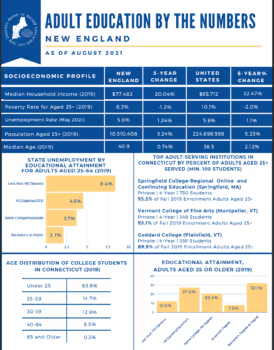
January 2021
Higher Education Behind Bars: Expanding Post-Secondary Educational Programs in New England Prisons and Jails, examines the effects of postsecondary opportunities for the incarcerated and formerly incarcerated in New England. Among other key findings in the report:
October 2020 (edited November 5, 2020)
This report provides an in-depth look at tuition and required fees published by two- and four-year public postsecondary institutions in New England for the 2019-20 academic year. Although many of the region’s postsecondary institutions have abandoned originally scheduled tuition increases in response to uncertainty regarding enrollment during the pandemic, tuition and fees in the region nevertheless continue to rise.
April 2020
This brief details the results from the New England Guide to Adult Serving Colleges and Universities Survey, issued to all colleges and universities in New England in summer 2019. Ninety-four of 250 institutions responded to the survey. Highlights from the Guide Survey include:
March 2020
This report provides an overview of existing opportunities and challenges for the region’s military and veteran students in terms of assessing and awarding credit for their prior learning (CPL) in the military. Five New England states – Connecticut, Maine, Massachusetts, New Hampshire, and Rhode Island – have legislation requiring a state agency, college system, or individual institutions to develop and adopt a policy on academic credit for a student’s military occupation, military training, coursework, and experience.
Even so, there is room for improvement in the region’s existing policies:
February 2020
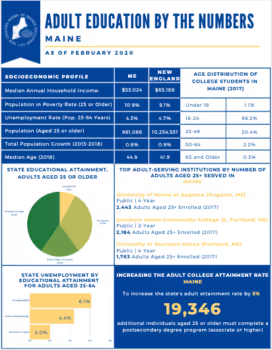
State fact sheets detailing data about adult learners in the region. Each fact sheet includes:
January 2020
The growth in the number of types and providers of credentials has much to do with new conceptions of the “currency” of higher education. Students and employers are placing more value on the skills, competencies and knowledge a learner obtains, rather than on credit hours, seat-time or degrees. Alternative credentials and credential providers are adapting to this trend in order to capture new students, be the provider-of-choice to employers, advance lifelong learning and keep pace with quickly changing industries and skill requirements.
A growing credentials marketplace may mean greater access to flexible, stackable and affordable programs, but it also has implications for the quality of learning and the employment outcomes of students. For individuals, the ability to interpret differences between types of credentials, education providers and professional benefits that come with credential attainment can have life-altering consequences.
This brief is designed to share insights, gleaned through the implementation of HVCNE and its advisory committee, on defining, identifying and supporting high value credentials.
September 2019
Since the 2013-14 academic year, tuition and required fees in New England have risen 21% ($959) at public community colleges and 18% ($1,811) at public four-year colleges, according to NEBHE’s 2018-19 Tuition and Fees Report. This report, published annually by NEBHE’s Policy & Research team, takes an in-depth look at the tuition and required fees published by public two- and four-year postsecondary institutions across New England. It explores emerging trends by providing a historical analysis of tuition and fees in the region to shed light on college prices, as well as legislative and institutional initiatives that seek to address affordability challenges.
July 2019
This brief examines available FAFSA completion data to assess how New England is closing the FAFSA completion gap for low-income students. Despite FAFSA completion data limitations, various metrics—such as the relationship between district poverty levels, median household incomes and FAFSA completion rates—provide an understanding of how New England states are supporting the FAFSA completion rates of low-income students. FAFSA completion is vital to the sustainability of higher education institutions (HEIs). The high number of incomplete FAFSA applications harms not only low-income students, but also colleges. Enrollment rates continue to decline in New England because of lower birth rates and changing demographics. Several campuses have been forced to close in New England due to shrinking enrollments. Increased efforts that support FAFSA completion for low-income students will be critical to the vitality of HEIs in New England now and in the future.
May 2019
This report takes an in-depth look at the available data for New England to make the case for the value of individual and public investments in higher education. It explores regional figures on attainment, income, unemployment, poverty and civic engagement, among other data points. Despite the alarming and unsustainable rise of college tuition and fee rates, the greatest cost associated with higher education is still the opportunity cost in terms of lost wages. The average associate degree holder in New England earns roughly $5,400 (17%) more annually than an individual who does not have an education beyond high school. The corresponding “wage premium” for a bachelor’s degree in the region is even greater: The average four-year college graduate in New England can expect to earn approximately $19,600 (62%) more per year than someone with a high school diploma only.
November 2018
In New England and across the U.S., it has never been more critical to hold a postsecondary credential to be able to fully participate in the workforce and earn a living wage. Yet, in recent years the cost of a college degree has risen precipitously — oftentimes becoming prohibitively expensive for far too many Americans to attend college. New England’s public colleges are the most affordable and financially accessible option for most individuals in the region, and their primary mission is to serve each of their state’s residents. Published tuition and fee rates play a significant role in students’ and their families’ decision about which college to attend to whether to even pursue a college degree. This brief takes an in-depth look at the tuition and required fees published by public two- and four-year postsecondary institutions in New England.
August 2018
Higher education students in the U.S. have been transferring at record levels. More than two-thirds who earn bachelor’s degrees from four-year institutions today have changed colleges at least once according to the National Student Clearinghouse Research Center. However, the U.S. Department of Education reported in 2015 that on average, students who transfer lose 13 credits already earned and paid for. The impact of lost credit on students is enormous and contributes to students taking an average of five or more years to earn a four-year degree. This brief explores if states in the region are making progress in developing policies and practices that: Facilitate transfer; Mitigate credit loss; Offer students who began at a community college and transferred to a four-year institution the opportunity to earn an associate degree through reverse transfer; Offer students who began at a community college and transferred to a four-year institution the opportunity to earn an associate degree through reverse transfer.
March 2018
The New England Board of Higher Education (NEBHE) Commission on Higher Education & Employability released a major report with recommendations to increase the career readiness of graduates of New England colleges and universities and improve their transitions to work. Chaired by Rhode Island Gov. Gina M. Raimondo, the 50-member Commission invested 11 months in public meetings and working group sessions exploring New England employers’ concerns about a lack of qualified, skilled workers, particularly in rapidly changing, technology-intensive and growth-oriented industries. In its report, “Learning for Life and Work,” the Commission offers a strategic action agenda with 18 key recommendations to align institutions, policymakers and employers.
September 2017
An update to NEBHE’s earlier released report, Policy Spotlight on New England: Undocumented Students & Access to Higher Ed. This Fast Facts includes current figures on the number of DACA participants in New England, as well as legislation before Congress.
August 2017
As postsecondary education becomes increasingly vital to the livelihood of New England residents and the region as a whole, policymakers are taking a more critical look at the price of college. As the lowest-price institutions, whose primary mission is to serve state residents, public colleges’ tuition and fees are especially of interest to state policymakers. Published tuition and fee rates are a major part of the equation of what students and families must pay for college. This Fast Facts in New England examines average tuition and required fees for state residents at public institutions in each New England state and in the region as a whole.
Spring 2017
While institutional leadership continues to play a big role in enrolling, retaining and graduating undocumented students, state policy and legislative action is crucial to supporting these students. Undocumented students are ineligible for federal financial aid programs such as Pell Grants, work study and government loans. As a result, these students rely almost exclusively on state support. Twenty states offer some form of financial aid to undocumented students, and most extend in-state tuition to undocumented students. Nationally, six states provide both in-state tuition and state financial aid. In New England, only two states offer financial support. Connecticut and Rhode Island extend in-state tuition to undocumented students if they meet certain criteria such as having attended a state high school for two or more years and graduated.
October 2016
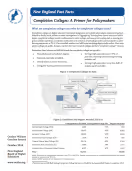
Completion colleges may present an affordable, alternative option for adults who’d like to attain a degree and who may otherwise turn to a private for-profit institution. Like many private for-profits, completion colleges are designed to serve adults who have been delayed in completing their degrees by offering more flexibility than many traditional colleges and universities.
Completion colleges do this by aggregating credits earned at other institutions with “prior learning.” Faculty members at completion colleges assess prior learning—college-level skills and knowledge often learned outside the classroom—to ensure that students don’t have to take and pay for courses on content they have already mastered. This “prior learning assessment” (PLA) may come in forms such as student portfolios that demonstrate mastery of course content, a subject assessment offered by the completion college, industry licensure or military experience. Once prior learning credits are applied toward a degree, most of the remaining courses necessary to complete a degree can be taken online.
September 2016
For the last 15 years, dual enrollment programs have been a high priority policy to tackle college readiness, affordability, and time to degree, with programs in all six New England states. However, opaque or confusing guidelines can disadvantage students looking to apply their credits to degrees or even leave some groups of students behind.
This NEBHE Policy Spotlight presents a regional overview of dual enrollment policies and programs. In addition, state-by-state program summaries illuminate policy gaps and areas ripe for improvement in New England.
September 2016
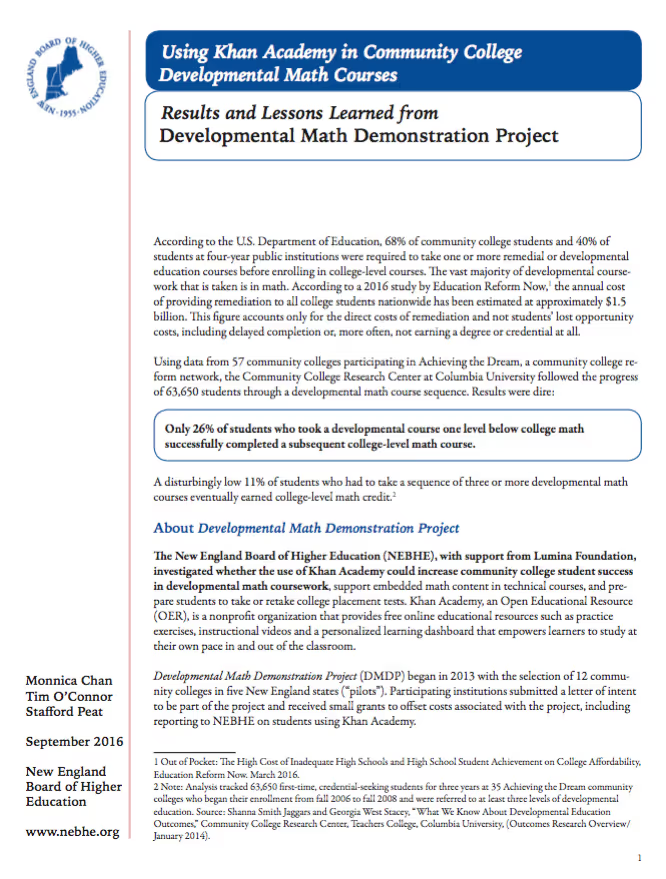
This brief reports on the effectiveness of using Khan Academy in developmental math coursework, career and technical courses and Accuplacer math boot camps. The three-year Developmental Math Demonstration Project was funded by Lumina Foundation and piloted in 12 community colleges across New England. The brief reports on student and instructor perceptions of using Khan Academy as well as project outcomes and challenges encountered by faculty.
August 2016

Higher education institutions are huge drivers of the New England economy. At a time when the goalposts are moving for the workforce, especially in terms of earning postsecondary degrees and credentials, understanding and supporting higher education’s contribution to the economy is crucial to maintaining regional competitiveness. The first in a new series from NEBHE, Higher Education’s Impact on the New England Economy: Investing in People explores how higher education fuels the regional economy through attracting, developing and retaining its most critical resource: its people.
June 2016

New England states, historically known as bastions of local control over public education, provide an especially interesting setting for examining the nexus of state policy and local practice. This Policy Spotlight delves into the implementation of a competency-based education system in districts across New Hampshire as a case study to illustrate important challenges to, and strategies for, statewide educational transformation.
May 2016
College readiness, due to little agreement on a definition and metrics, is difficult to measure. Yet, it’s important because it influences postsecondary enrollment, the time it takes to obtain a degree, and overall college completion. Further, the number of jobs that require higher education continues to grow: the Georgetown Center for Education and the Workplace estimates that 65% of all jobs will require at least some postsecondary education by 2020. College readiness directly impacts the development of a productive workforce. This Fast Facts in New England examines the college readiness of the region’s high school students using the most recent available measures and data.
April 2016
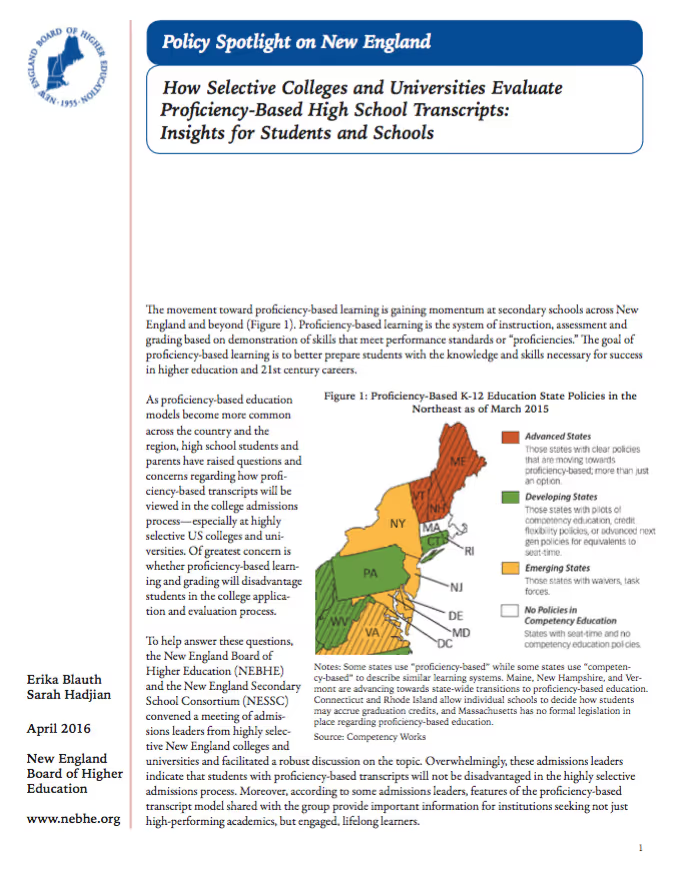
As proficiency-based education models become more common across the country and the region, high school students and parents have raised questions and concerns regarding how proficiency-based transcripts will be viewed in the college admissions process—especially at highly selective US colleges and universities. Of greatest concern is whether proficiency-based learning and grading will disadvantage students in the college application and evaluation process. To help answer these questions, the New England Board of Higher Education (NEBHE) and the New England Secondary School Consortium (NESSC) convened a meeting of admissions leaders from highly selective New England colleges and universities and facilitated a robust discussion on the topic. This Policy Spotlight on New England offers insights from that meeting.
March 2016
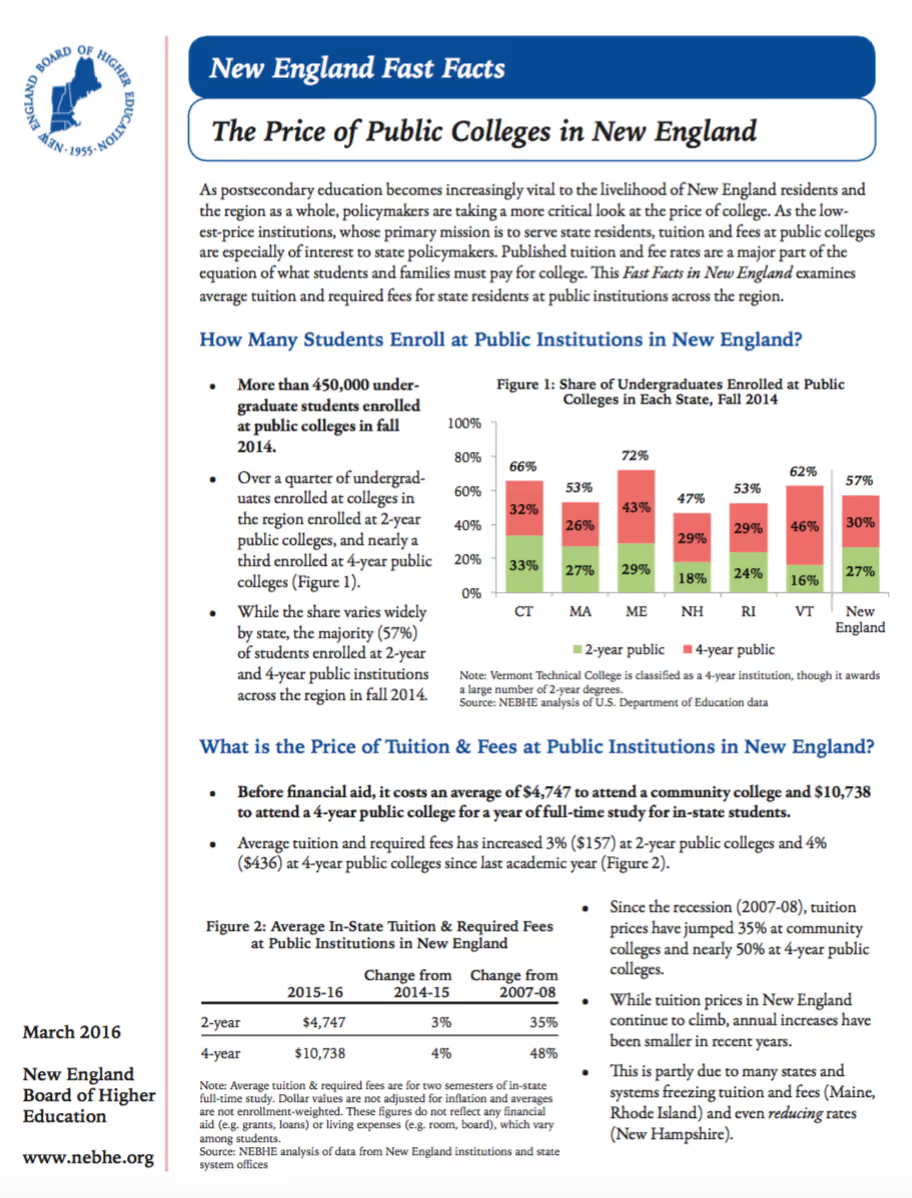
As postsecondary education becomes increasingly vital to the livelihood of New England residents and the region as a whole, policymakers are taking a more critical look at the price of college. As the lowest-price institutions, whose primary mission is to serve state residents, public colleges’ tuition and fees are especially of interest to state policymakers. Published tuition and fee rates are a major part of the equation of what students and families must pay for college. This Fast Facts in New England examines average tuition and required fees for state residents at public institutions in each New England state and in the region as a whole.
February 2016
In an effort to support college affordability in the region, NEBHE initiated the project (Redesigning Aid) in 2014. Funded by Lumina Foundation, Redesigning Aid combined custom state financial aid research with expertise of national experts and regional practitioners to support states committed to analyzing and redesigning state financial aid programs and policies. Drawn from discussions of the project’s Regional Advisory Council, this report shares key insights from Redesigning Aid and recommendations for how higher education leaders can strengthen state investment in college affordability.