Blog Content


May 12, 2017
According to the annual College Openings Update provided at the beginning of May by the National Association of College Admissions Counselors (NACAC), 50 New England colleges and universities reported they could consider additional freshman and transfer applications for fall 2017.
Of the 50, the following 13 public colleges reported freshman and transfer openings:
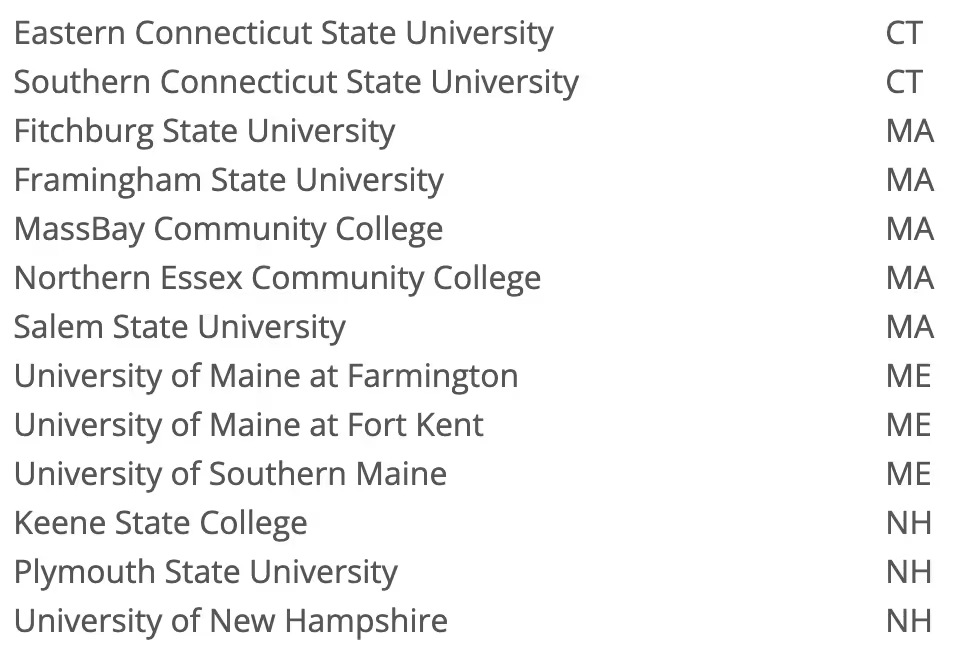
Only two community colleges reported openings. However, most community colleges are able to consider applications until the beginning of the fall semester, except for their more competitive programs. Interested students are encouraged to check with individual community colleges where they are interested in applying.
Three more New England public colleges said they could review additional applications from transfer students only: the University of Vermont, Western Connecticut State University and Worcester State University in Massachusetts.
Of New England’s independent colleges, 37 of them reported freshman and transfer openings.
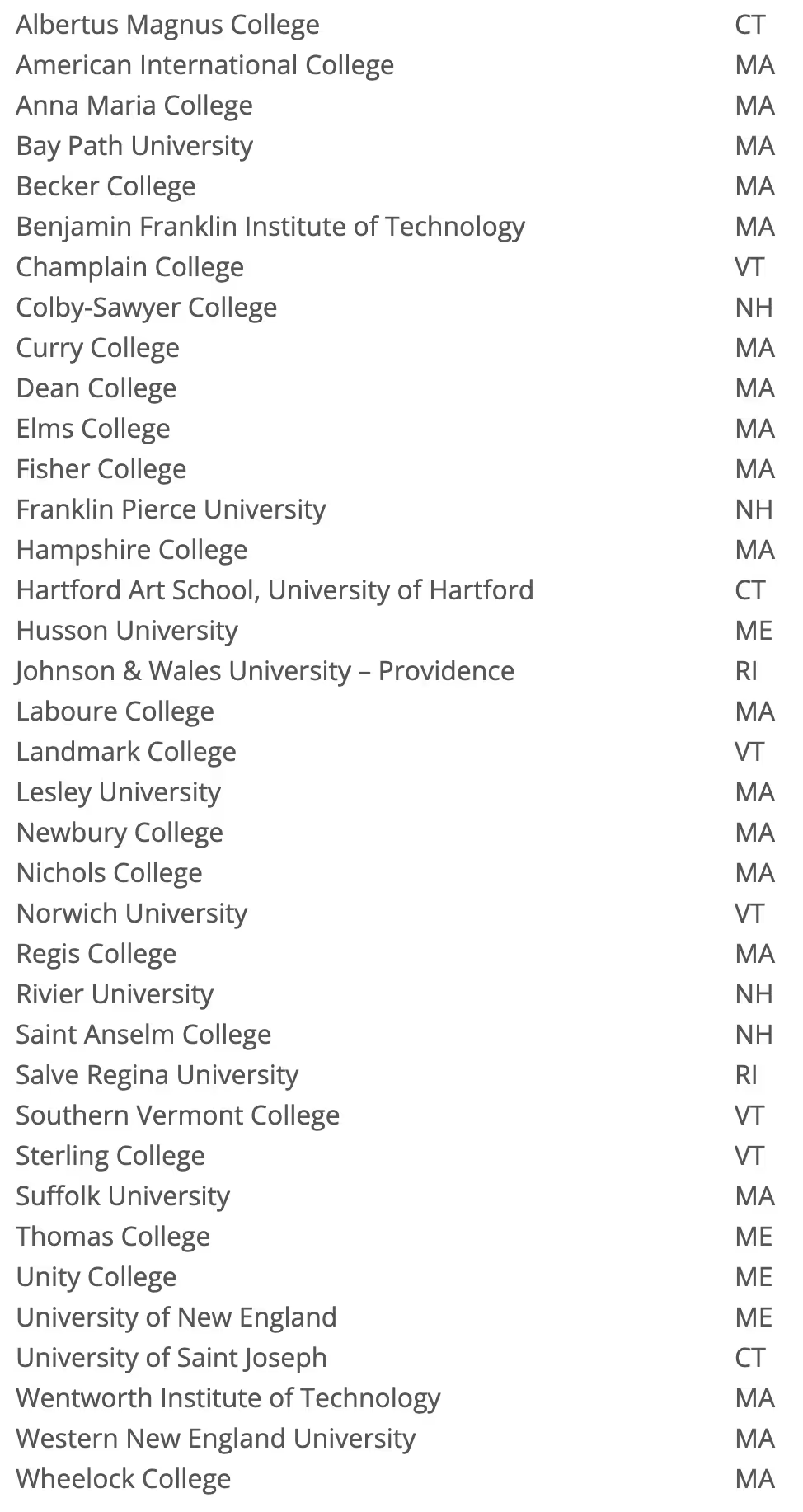
Three additional independent colleges reported openings for transfers only: Sacred Heart University, Merrimack College and Providence College.
NACAC surveys its member postsecondary institutions on the availability of space, institutional financial aid and housing as of May 1. Survey responses are voluntary. The number of potential respondents is about 1,300 U.S. NACAC member four-year colleges (leaving about 1,000 U.S. four-year colleges unaccounted). NACAC member two-year colleges and international colleges also were invited to participate. The survey remains open, after an initial May 3 deadline, until June 30 to allow surveyed colleges and universities to update their information. As of May 3, a total of 414 institutions had responded.
Visit NACAC for the complete list of “open” colleges and universities through the U.S. and in several other countries.
Monitoring college student “vacancy rates” takes on new importance, as New England struggles with shrinking cohorts of high school graduates and increased competition among higher education institutions.
The New England Board of Higher Education conducted a Student Vacancy Survey of New England colleges and universities every spring from 1960 to 2009.
Wendy A. Lindsay is senior director of NEBHE’s Tuition Break (Regional Student Program).