Blog Content


August 14, 2019
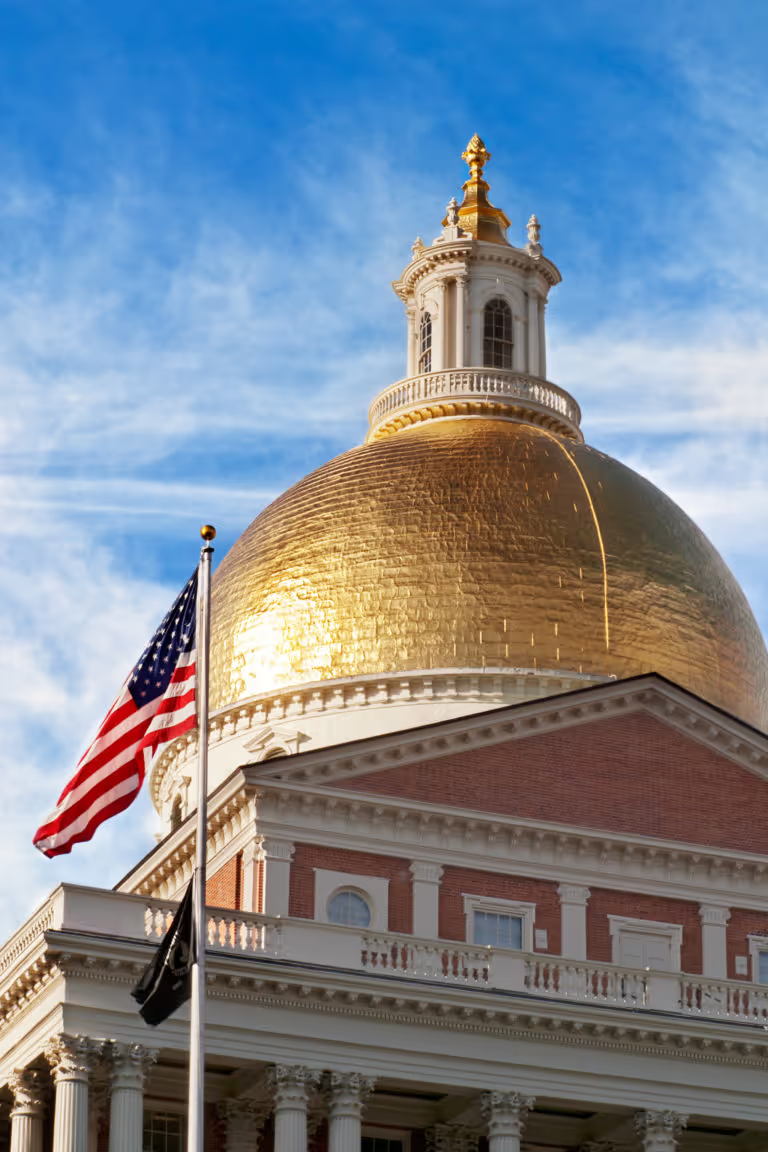
Seven months into the 2019 session and three weeks into the new fiscal year, Massachusetts lawmakers completed work on the FY20 budget. The spending package of $43.1 billion represents a 3.3% increase over the prior year’s budget and contains no new taxes. Revenue collections at the end of FY19, totaled more than $29.6 billion, exceeding projections by $1.9 billion, which translated into more state money for local projects in FY20.
The Massachusetts Legislature is one of only 10 full-time state legislatures that meet throughout the year. The other nine states are outside New England (Alaska, California, Hawaii, Illinois, Michigan, New York, Ohio, Pennsylvania and Wisconsin).
Gov. Charlie Baker signed the budget without any line item vetoes, noting the spending plan was balanced. The unexpected boost in revenue collections allowed lawmakers and the governor to put $476 million in the state’s stabilization fund, which now stands at $3.3 billion, providing a substantial cushion for any emergencies that may arise.
During the budget process, legislators from both branches worked on a plan proposed by the Baker administration to cut the cost of prescription drugs. The plan sets up direct negotiations with drug companies for high-priced drugs prescribed for Mass Health patients. While drug manufacturers can’t be required to negotiate or be part of public hearings, the Baker administration can request negotiations if a drug costs more than $25,000 annually after rebates or if the state spends $10 million a year after rebates. Currently, two drugs that cure Hepatitis C would qualify: MassHealth spent $116 million on a medication called Harvoni before rebates in 2018 and $80.5 million on another medication, Epclusa.
The Baker administration anticipates $70 million in savings from negotiations conducted by the Executive Office of Health and Human Services. Pharmaceutical companies would face financial penalties if they fail to confidentially share drug-pricing data with the Massachusetts Health Policy Commission (HPC).
The HPC was established in 2012 as an independent state agency charged with monitoring health care spending growth in Massachusetts and providing data-driven policy recommendations regarding health care delivery and payment system reform.
The FY20 budget includes $5.2 billion to fund public K-12 education including $270 million in Chapter 70 aid. Also included are resources for a multiyear overhaul of the school finance formula and enabling full implementation of the Foundation Budget Review Commission’s recommendations. The caveat is this is good for only one year. Advocates advise that lawmakers must make a commitment to fill the $1 billion hole in state funding for education in future years.
The budget also includes $20.3 million to develop and expand college and career pathways for high school students through the STEM Pipeline and Early College programs as well as the expansion of targeted workforce development programs for black and Latino youth.
Other budget highlights:
In other action, Baker signed legislation into law to delay the implementation of the Paid Family and Medical Leave Act, passed in the previous session. The three-month delay will allow employers, employees and the marketplace further time for developing implementation of the plan.
Two bills have been filed to address the underfunding of public education. The Promise Act (S.238), legislation filed by Sen. Sonja Chang-Diaz, would address the $1 billion underfunding of PreK-12. Most of the $1 billion is targeted for districts with the greatest need and the least amount of resources. The legislation provides for the following changes in the formula:
A similar measure for higher education, the Cherish Act (S.741) filed by Sen. Jo Comerford and H.1214 (filed by Rep. Sean Garballey) would require:
Carolyn Morwick directs government and community relations at NEBHE and is former director of the Caucus of New England State Legislatures. Visit here for summaries of the legislative sessions in other New England states.