Blog Content


March 23, 2021
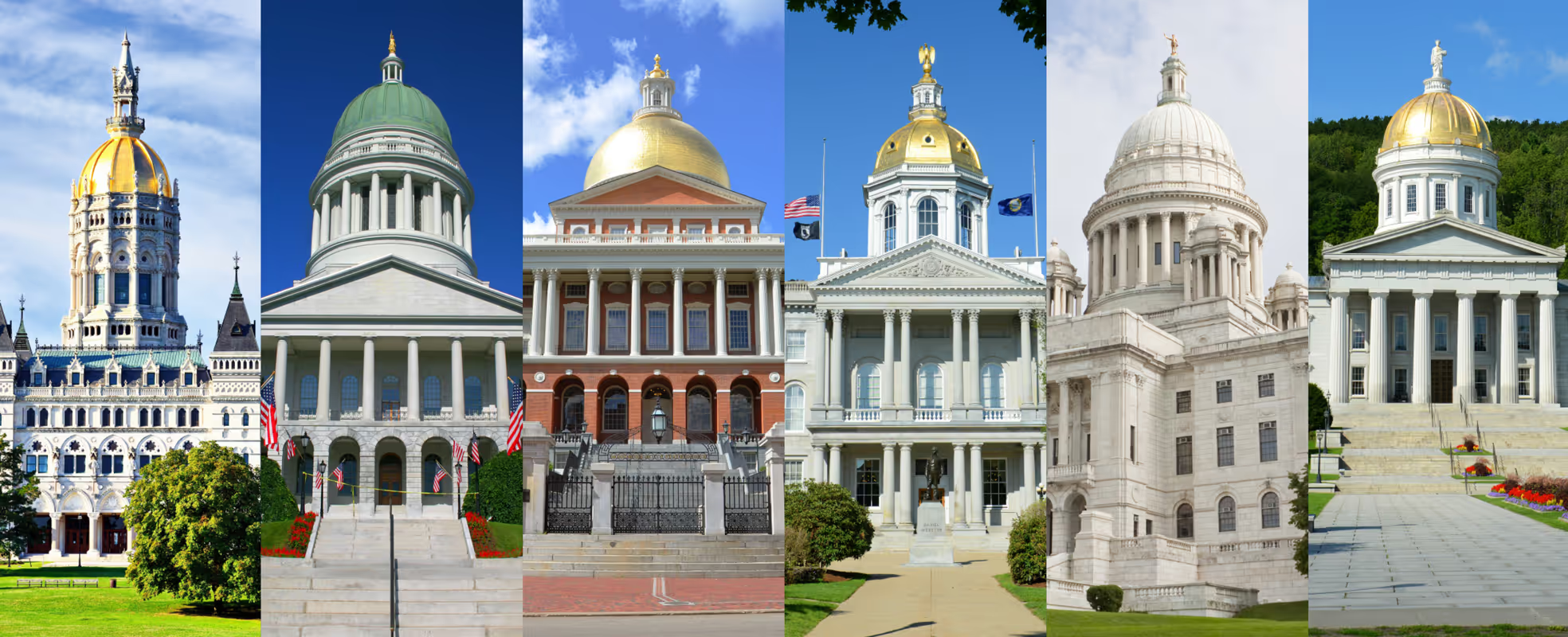
New England’s state lawmakers in 2020 sessions focused almost exclusively to COVID-19-related legislation and state budget concerns. In 2021, COVID-19-related legislation continues to be a major focus, but other issues are also taking center stage. These include:
Expanding Work-Based Learning Opportunities
Sexual Assault on Campus
COVID-19: General
COVID-19-Related Learning Loss
Attainment
State Budgets and Governors’ Priorities
Some New England states have pursued innovations through their budget processes and governors’ priorities. For example:
Connecticut
SB.881, proposed by Gov. Ned Lamont, would include, among other things, a direct admittance program and would establish FAFSA completion as a high school graduation requirement.
Lamont proposed a $44 billion two-year budget. Budget priorities include hiring more state troopers, improving the state’s education system, enhancing workforce development, boosting transportation, upgrading the state’s broadband capacity and fighting COVID-19.
Maine
Gov. Janet Mills, in her state-of-the-state address, introduced two major proposals.
To accelerate Maine’s economic recovery, get people back to work and diversify Maine’s economy, Mills also announced that, in the coming weeks, her administration will present to the Legislature a “Back to Work” bond proposal. The proposal draws on Maine’s 10-year Strategic Economic Development Plan as well as recommendations from the governor’s Economic Recovery Committee. The proposal would prioritize:
The governor also announced the launch of a pilot of the Maine Career Exploration Program, a key recommendation of Maine’s 10-year Economic Development Plan in Franklin and Somerset counties to provide scholarships and paid internships for local students with local employers. Internships will be in the trades, healthcare and other fields. The goal is to ensure that 100% of Maine students have the option for a six-month paid internship between their junior year of high school and one year after high school graduation.
Massachusetts
The state’s financial health is stronger than initial estimates suggested.
Gov. Charlie Baker’s State of the Commonwealth address focused on how Massachusetts has and continues to respond to the COVID-19 pandemic, but did not provide details about legislation on which the governor may be working.
The Legislature is prioritizing bills to better serve the Commonwealth’s diverse populations and support their success in higher education.
New Hampshire
The biggest news from the Granite State is Gov. Chris Sununu’s announcement in his budget proposal (HB.2) for a “fully unified and merged New Hampshire College and University System” to bring “11 separate system (sic) together as one.”
The proposal includes:
Similar to Connecticut, New Hampshire is considering legislation (SB.147) that would require high school graduates to complete the FAFSA and mandate high schools to provide sufficient resources for students and parents to understand and complete the application.
Rhode Island
Gov. Gina Raimondo’s State of the State address was a farewell speech, as she shortly thereafter became U.S. commerce secretary. A large portion of her speech was spent reflecting on her policy priorities over the past six years. On education, the governor underscored her most memorable education-related accomplishment: the Rhode Island Promise scholarship program, which offers all high school graduates two years of tuition-free college at the Community College of Rhode Island. She thanked House Speaker Joseph Shekarchi and Senate President Dominick Ruggerio for introducing legislation last week that would make the program permanent.
Vermont
Gov. Phil Scott highlighted investments in public health, economic relief, housing and more over the course of the pandemic. He asked the Legislature to collaborate with his administration and build on that progress to address disparities in education and childcare, promote economic opportunity and job growth, and make Vermont more affordable for working families.
Scott acknowledged the challenges Vermont faces as a result of its aging population and shrinking workforce—specifically citing Vermonters who have left the state to attend college elsewhere. He called for policies that support the state’s economic growth, saying, “We need more taxpayers, not more taxes.”
Stephanie M. Murphy is the associate director of policy research and analysis at NEBHE.