Blog Content


September 19, 2017
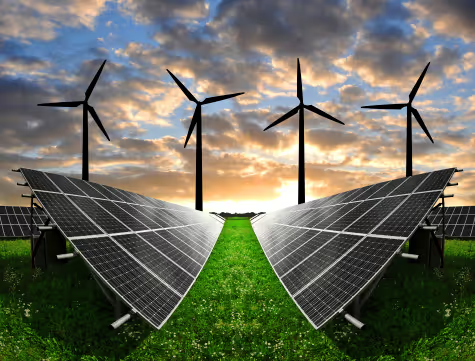
It is difficult to travel on any road today without seeing solar panels on the rooftops of houses, larger solar farms across vast fields or wind turbines in the distance. With larger initiatives to create more environmentally sustainable energy and reduce carbon footprint, many universities are reviewing their options for alternative energy sources.
Three of the most common types of alternative energy solutions being installed today are solar panels, wind turbines and cogeneration plants. Ensuring that these efforts to “go green” have long-term success requires an understanding of possible risks and how best to manage them.
A primer:
Solar (photovoltaic) panels
Solar panels convert sunlight to electricity. The individual panels comprise multiple photovoltaic cells. Typically, the panels will be installed as part of a solar array, either on a roof or mounted in a field. Solar is one of the fastest-growing segments in renewable energy and it’s easy to see why. With low maintenance costs and high reliability, solar panels can lower overall electricity costs and add some independence from the electrical grid and its peak prices.
But the addition of solar arrays does carry some potential risk that needs to be taken into account, including:
In addition to these specific hazard considerations, it’s important to understand who will be financially responsible for the array. In most cases, arrays tend to be owned by a third party, which can complicate risk mitigation and damage repair efforts. Be sure that this is decided on and understood early on.
Wind turbines
Wind turbines convert kinetic wind energy into electricity, using this to turn the blades of a rotor that is connected to a main shaft, which then spins a generator to create current. Along with solar, wind is a rapidly growing option and one of the most visible of the green energy sources. Like solar, it has some key benefits, including the use of a free, abundant resource (wind) to create the electricity, as well as relatively low operational costs. Like solar, wind also has risks that should be factored into planning, installation and operation, including:
Cogeneration
Cogeneration systems are so-named because they produce both heat and power. The excess thermal energy produced in the production of electricity is captured and used for heating buildings or water, or even for powering absorption refrigeration to provide building cooling. As with both solar and wind, cogeneration can provide a measure of grid independence and insulation against price spikes and outages, and—in many areas—provide an income stream from excess energy sold back to the utility.
Like the systems themselves, the downsides of cogeneration can be a bit more complex. They include:
As technologies have matured, environmental concerns have grown and, where other fuels have become more unpredictable in cost, going green has gained real momentum. So, bringing some form of renewable energy to campus is likely a question not of “if” but of “how.” Risk is real, but with foresight, planning and insurance, it can be easy—and beneficial—to be green.
Amy Hahn is a loss control engineer and certified fire protection specialist at Risk Strategies Company.