Blog Content


November 3, 2020
Diversity. Equity. Inclusion.
These words have dominated the national conversation in recent weeks. From the racial justice protests that have sprung up across the U.S. since the death of George Floyd, to the White House’s recent executive order against the “malign ideology” of diversity training efforts in federally funded programs, individuals from both sides of the political aisle have had a lot to say on the matter.
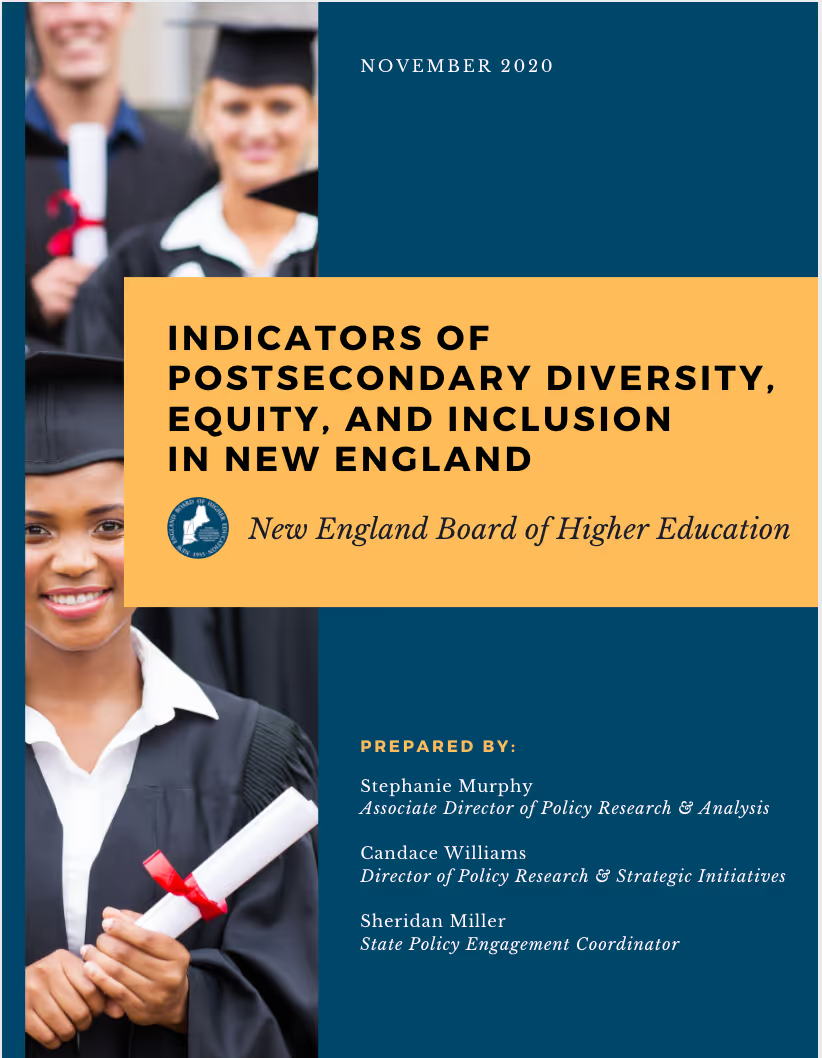
NEBHE’s latest report, Indicators of Postsecondary Diversity, Equity and Inclusion in New England, examines the disparities that exist in the region along racial and ethnic lines, many of which begin at birth and persist through young adulthood and beyond. The report draws from multiple data sources to provide measures of postsecondary equity, diversity and inclusion in five areas: college readiness, access and enrollment, college affordability, post-college success, and faculty diversity at New England’s postsecondary institutions.
Despite the American democratic ideal of education as a “great equalizer,” NEBHE finds chronic postsecondary opportunity gaps in nearly every indicator of equity, diversity and inclusion between New England’s Black and Hispanic populations and their white peers. Among other key findings in the NEBHE report:
New England’s population is rapidly diversifying: By 2032, New England’s population of new white high school graduates is forecast to shrink by 21%; by contrast, the region’s population of new Black high school graduates is projected to grow by 7% and new Hispanic graduates are expected to grow by 26%. As these major demographic shifts continue, erasing the postsecondary racial disparities that exist in the region will be critical to New England’s economic vitality. Higher education leaders and policymakers must act now to ensure that every New Englander has the same opportunity to thrive.
Stephanie M. Murphy is the associate director of policy research and analysis at NEBHE.